
How it works
The medical symbol on the front tells a paramedic to look on the back. The back tells them what you’d want them to know. No app, no account, no subscription.

How a medical ID helps
If you’re taken ill and can’t explain what’s wrong, here’s what your pendant does in the minutes that matter.
- The crew look for medical jewelleryWhen someone can’t explain what’s wrong, paramedics check the neck and wrists for medical ID.
- They see the medical symbolIt tells them there’s information on the back.
- They turn it overThey read what you chose to engrave, such as your name, a condition, an allergy or someone to call.
- They know what matters straight awayA line such as T1 DIABETIC or PENICILLIN can change how they care for you.
- Your family can be told soonerWith your name or an emergency contact on the back, you won’t be an unknown patient.

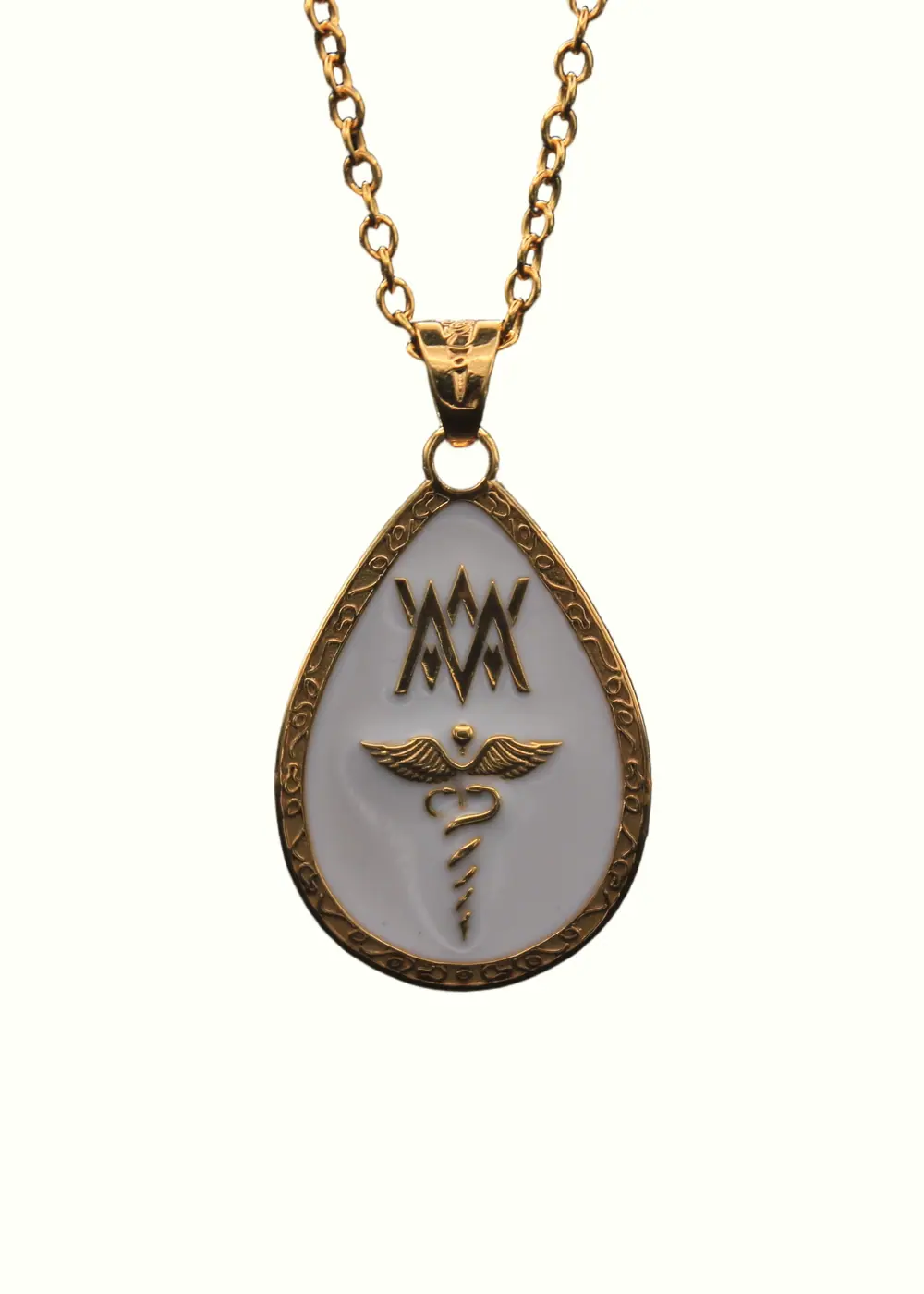
On the front: a symbol paramedics know
Every pendant has a medical symbol on its white enamel front. Paramedics recognise it, and it tells them to look on the back.
Above it sits our MediWear mark. That’s the jewellery detail. It means the pendant looks like something you chose to wear, not something you were told to.
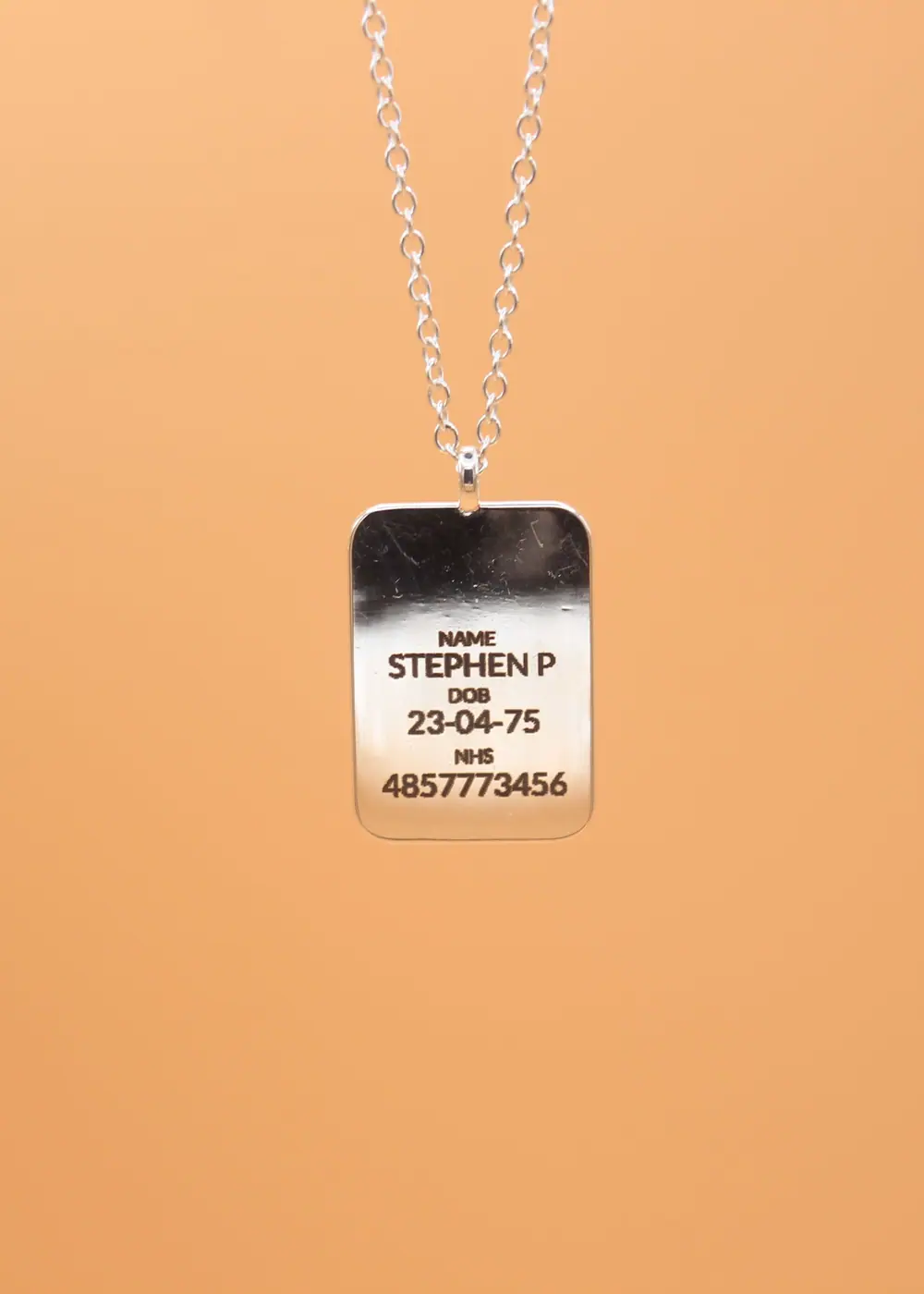
On the back: the details you choose
You decide what goes on the back. You can have up to four lines, and only one is needed. Most people choose from:
- their name
- a condition, an allergy or a medicine that changes treatment
- someone to call in an emergency
- their NHS number, which we recommend
The one in the photo has a name, date of birth and NHS number. Yours can say whatever matters most to you.
- Name
- Jean Smith
- Born
- 14 March 1952
- Medicines
- Amlodipine 5mg, once a day
Metformin 500mg, twice a day - Allergies
- Penicillin
- Reactions
- Codeine: severe sickness
An example only. Your record is kept by your GP practice.
Why we recommend your NHS number
Everyone registered with a GP in England and Wales has a 10-digit NHS number. It’s unique to you and stays the same for life, even if you move house or change surgery.
In England, ambulance crews and hospital staff can use it to look up your Summary Care Record. This is a short summary of your GP record. It includes:
- the medicines you take
- any allergies you have
- any bad reactions you’ve had to medicines
Many records also include extra information, such as long-term conditions. What’s on yours depends on your GP practice, so it’s worth asking them.
That’s far more than fits on the back of a pendant, which is why we recommend it. It’s still your choice, and you can leave it off.
In Wales, Scotland and Northern Ireland different records and numbers are used. See below.
Keeping your record up to date
If you’ve added your NHS number, it never changes, so that line on your pendant stays right. What matters is that the record behind it is right too.
- When your medicines change, ask your surgery to check your record has been updated.
- Tell your GP about any new allergy, or any reaction you’ve had to a medicine.
- You can see your own record in the NHS App, or ask your surgery to go through it with you.
A gentle reminder, if you’d like one. When you order, you can ask us to email you every three months as a reminder to check your record. It’s optional, and you can stop it at any time.
Scotland, Wales and Northern Ireland
A pendant with your name, a condition or someone to call helps wherever you are. If you’d also like to add a health number, choose the one your health service uses:
| Where you live | Number to add |
|---|---|
| England | NHS number |
| Wales | NHS number |
| Scotland | CHI number |
| Northern Ireland | Health and Care (H&C) number |
The Summary Care Record is used in England. Each nation has its own way of sharing records with emergency staff. Your GP practice can tell you what’s available where you live.
Choose what goes on yours
Pick a pendant, then add up to four lines. You’ll see a written proof and a 3D preview before you order.